SPSTARPLAST — Manufacturing ERP
An ERP in production use for insulation anchor manufacturing. 16 modules and 50+ screens cover sales, production, inventory, quality, shipping and purchasing in one system, with per-user access control, a company-wide activity feed and integration with the company's LOGO ERP. Built and maintained by a sole developer, then handed over to the client in September 2026.
- Client SPSTARPLAST
- Sector Manufacturing
- Scope End-to-end ERP
- Owner Savaş Tutumlu
- Timeline May 2025 – Sep 2026
- Status In production · handed over Sep 2026
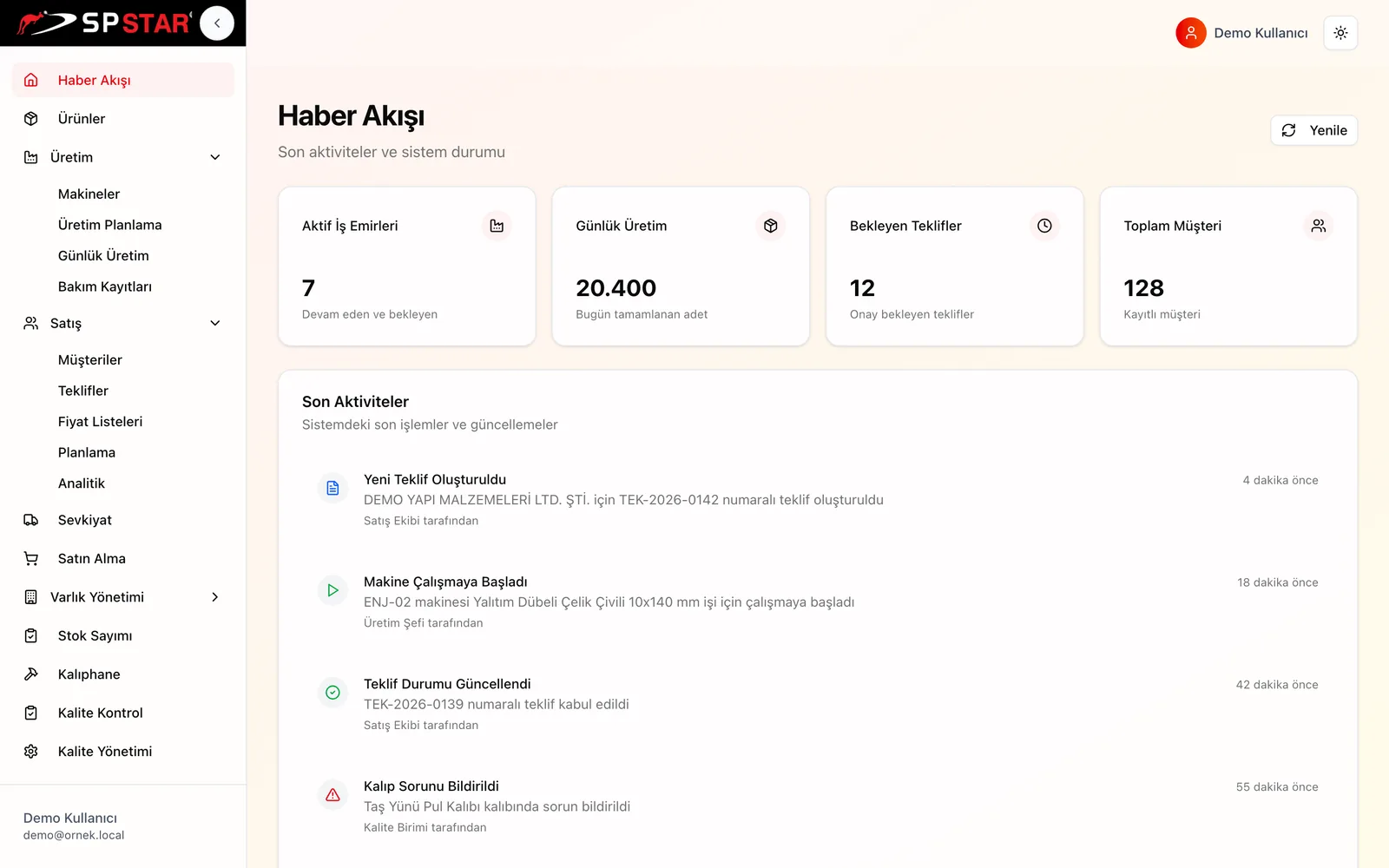
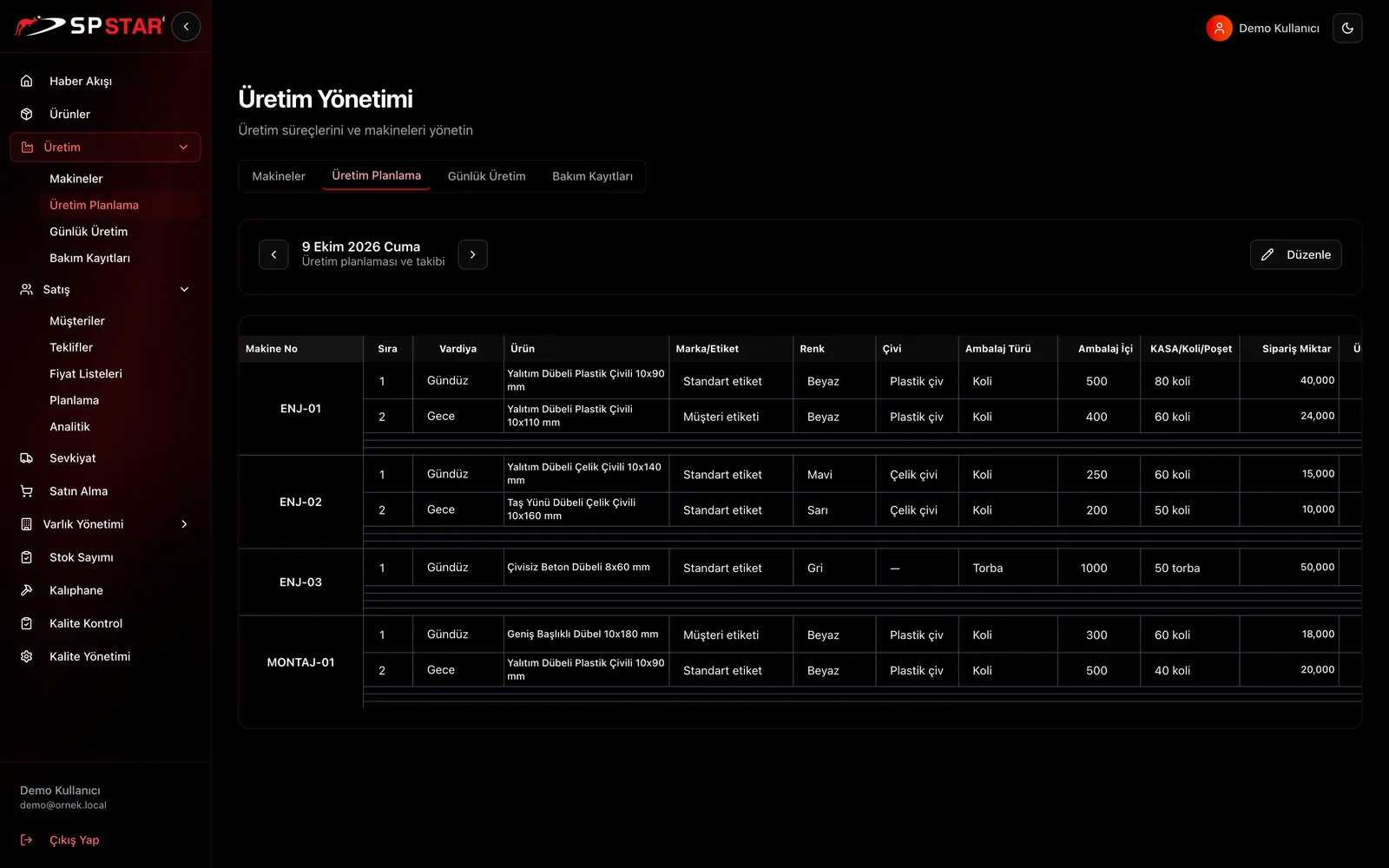
Inside the ERP
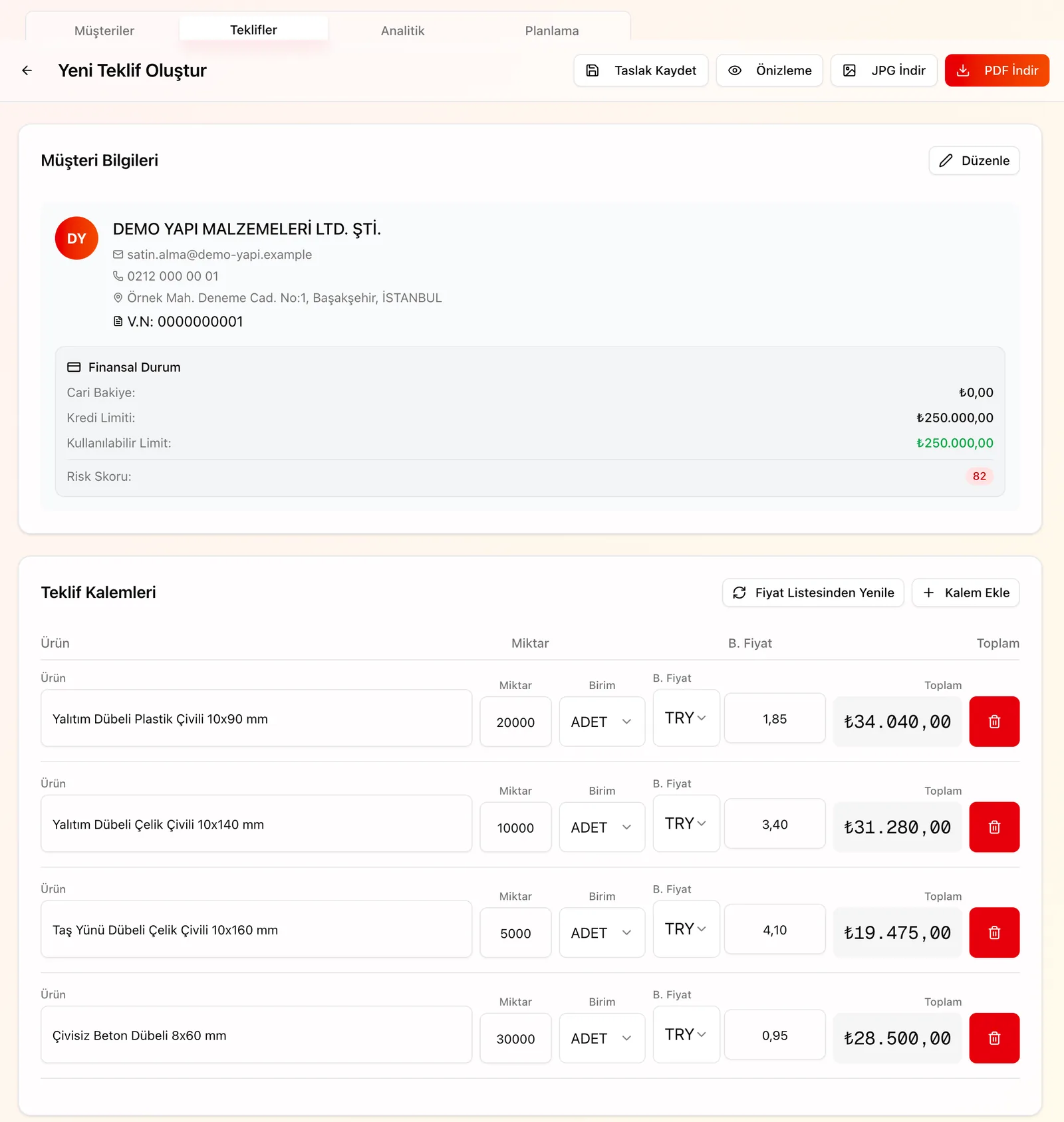
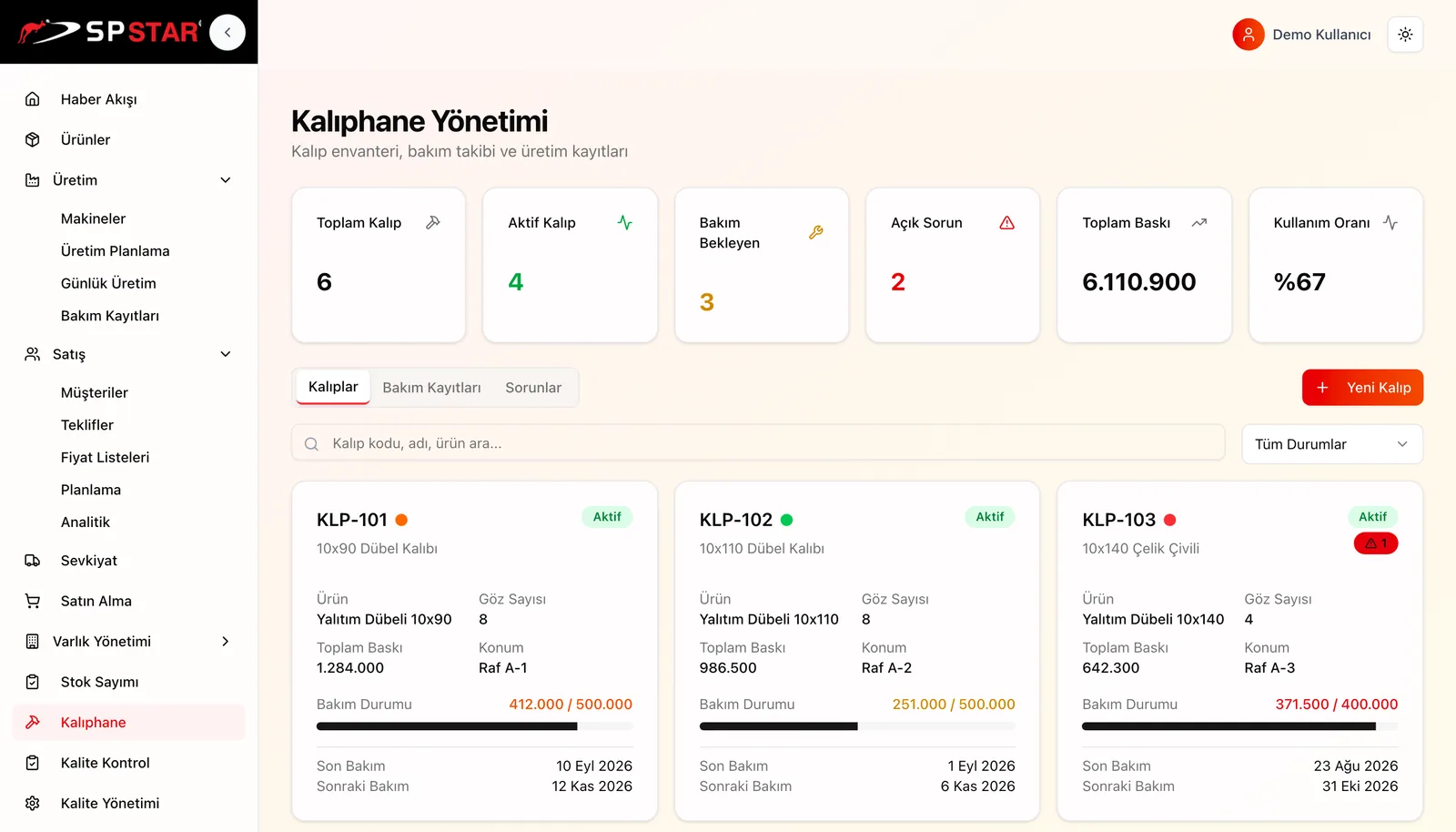
The Turkish interface, rendered from the final production code with invented sample data. These are not captures of the client's live system. Select any screen to open it at full size.
System Scope
From customer quotes to shipment, in one system.
Users
17+ active usersIncluding 7 administrators for different departments.
Database
90+ tables29 database migrations, including PostgreSQL functions and triggers.
Modules
16 integrated modules50+ screens with a Turkish UI.
Codebase
50,000+ lines of code100+ reusable components.
Core areas
- Sales
- Production
- Purchasing
- Quality
- Shipping
- Inventory
- Assets
- Mold shop
- Stock count
Key Modules and Flows
Sales
- 4,775+ customers with financial profiles
- 817+ quotes with cascaded discounts
- Quote builder with customer price lists, multi-currency pricing at live exchange rates and PDF/JPG export
- Sales planning calendar and reminders
Production
- Daily plans with machine scheduling
- 30+ work orders with live status
- 133+ molds and 21 machines
- Unfinished jobs roll over to the next day; machine maintenance logs
Quality and logistics
- 388+ quality tests and 197+ QC forms
- Incoming, in-process and final inspection forms and an ISO document library
- Shipping with carriers and planning
- Inventory and stock counting
Mold shop
- Shot counters for each injection mold
- Maintenance thresholds and maintenance records
- Issue tracking per mold
LOGO ERP integration
- Customer, supplier and stock cards sync in from the company's LOGO ERP
- Customer statements and purchase history come from LOGO
- Accepted quotes post to LOGO as sales orders automatically
Technology and Integration
Next.js and React on the front, Supabase for the database, sign-in and files, and a two-way link to LOGO ERP.
Interface
- Next.js 15 (App Router), React 19, TypeScript and Tailwind v4.
Data and integration
- Database — Supabase PostgreSQL, with functions and triggers for document numbering, order totals, mold shot counts, and production-plan sequencing and rollover.
- Sign-in — Supabase Auth with per-user access control.
- Files — documents and assets in Supabase Storage.
- Activity feed — 4,500+ system events, filtered by each user's access and refreshed every 30 seconds.
- LOGO ERP sync — customer, supplier and stock cards come in from LOGO, and accepted quotes go back as sales orders.
System flow
+--------------------------+      +--------------------+
| Next.js 15 (App Router)  |<---->| LOGO ERP           |
|  - UI modules            |      |  cards and         |
|  - API routes            |      |  statements in,    |
+-------------+------------+      |  sales orders out  |
              |                   +--------------------+
              v
+--------------------------+      +------------------+
| Supabase PostgreSQL      |<---->| Supabase Storage |
|  - Auth                  |      |  assets/files    |
|  - triggers/functions    |      +------------------+
|  - activity events       |
+-------------+------------+
              |
              v
        Monitoring and logs
Access, Audit and Performance
Who sees what
- Per-user access — each user is granted any of 14 functional areas, applied to routes, navigation and the activity feed.
- Role-based permissions — sales, production and admin teams each get the areas they work in.
Every action tracked
- Audit trail — who changed what, and when.
- Error logging — issues are logged with their context.
Performance
- Caching — data is cached on the client to avoid repeat server calls.
- Large lists — screens that display thousands of records.
- Validation — data is checked before it is saved.
Business rules in the database
document numbers   -> numbering functions
order totals       -> totals triggers
mold shot counts   -> update_mold_shot_count
production plan    -> sequencing, plus rollover
                      of unfinished jobs
In Production
These counts come from the system in production use, not from a demo.
Sales and customers
- 4,775+ customers with full financial history
- 817+ quotes tracked and converted
- 3,500+ sales orders processed
- 6,704+ order lines fulfilled
Manufacturing
- 96 production plans scheduled
- 3,263+ items planned and tracked
- 30+ active work orders in progress
- 21 machines, 133+ molds coordinated
Quality and operations
- 388+ quality tests documented
- 257+ purchase orders (806+ line items)
- 363+ assets tracked and maintained
- 32 inventory counts completed
What the system does for the team
Production planning
Live job timers and validation before saving; unfinished jobs roll over to the next day.
One set of records
Quotes, production schedules, quality checks and shipping work from the same up-to-date data.
Scoped to each user
Each user sees the areas they are granted for their role, and nothing else.
Activity trail
A record of who did what and when, so processes can be repeated and checked.
Handover
Designed, built and maintained by a sole developer from May 2025 to August 2026, then handed over to the client in September 2026.
Clean repository
The codebase was handed over clean, with English technical documentation.
Technical-debt report
A written technical-debt report delivered with the code and documentation.
Full ownership
Code, database and hosting moved to the client's own GitHub, Supabase and Vercel accounts with no downtime.
Role: Savaş Tutumlu was the sole developer, from design through maintenance to the handover.
Related Services and Reading
The services behind this ERP, and articles on building one.
ERP Development
ERP modules built around how a plant quotes, plans, produces and ships.
IndustryManufacturing Software
Software for production planning, quality and shop-floor records.
ServiceSystem Integration
A new system connected to the ones a company already runs, such as LOGO.
ServiceCustom Software Development
Business software built for one company's processes, then handed over in full.